

Data Center RESOURCES
WHAT IS A DATA CENTER?
Data centers power the digital services we rely on every day—from cloud computing and artificial intelligence to healthcare, banking, education, and national security. As demand for digital infrastructure increases, Lubbock’s reliable utilities, available land, strong connectivity, and skilled workforce position our community for responsible growth.
FIVE TYPES OF DATA CENTERS
Data centers serve many different purposes. Some support a single business, while others power cloud computing, artificial intelligence, or the internet itself. Understanding the different types can help explain why no two data center projects are exactly alike.
- Enterprise Data Centers
These facilities are built and operated by a single company to support its own business operations, such as storing data, running applications, and protecting company information. - Colocation Data Centers
Think of these as shared facilities. Multiple businesses rent space for their servers while the data center provides the building, power, cooling, security, and internet connectivity. - Hyperscale Data Centers
These are some of the largest data centers in the world. They support services like cloud computing, artificial intelligence, online storage, streaming, and other digital platforms used by millions of people every day. - Edge Data Centers
Smaller facilities located closer to homes and businesses, edge data centers process information near where it’s needed. This helps reduce delays and improves performance for services like online gaming, video calls, autonomous technology, and smart devices. - Carrier Hotels
Carrier hotels are connection hubs where internet service providers, cloud companies, and telecommunications networks exchange data. They help keep digital communications fast, reliable, and connected.
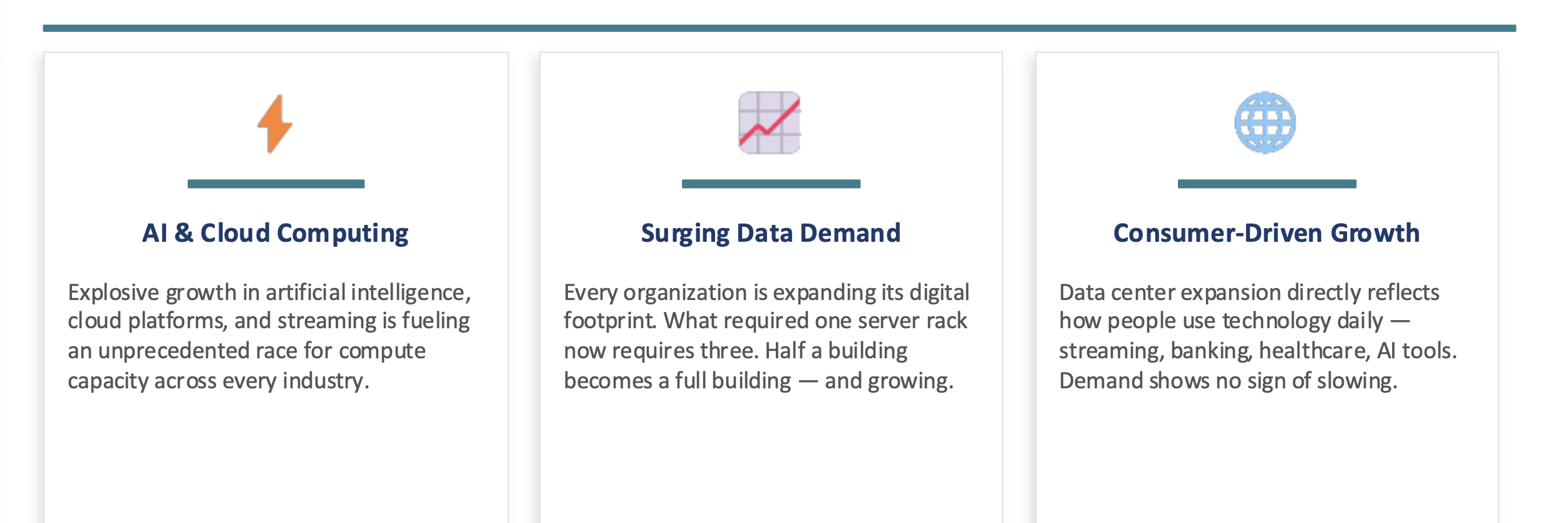
WHAT’S DRIVING THE DATA CENTER BOOM?
Where are data center projects growing in our region?
This map highlights more than $430 billion in announced capital investment across West Texas, demonstrating the significant growth of the data center industry throughout the region. It also shows that 30 of 34 projects are being developed in unincorporated areas, where land use and development oversight differ from that of incorporated cities with established zoning and development regulations.
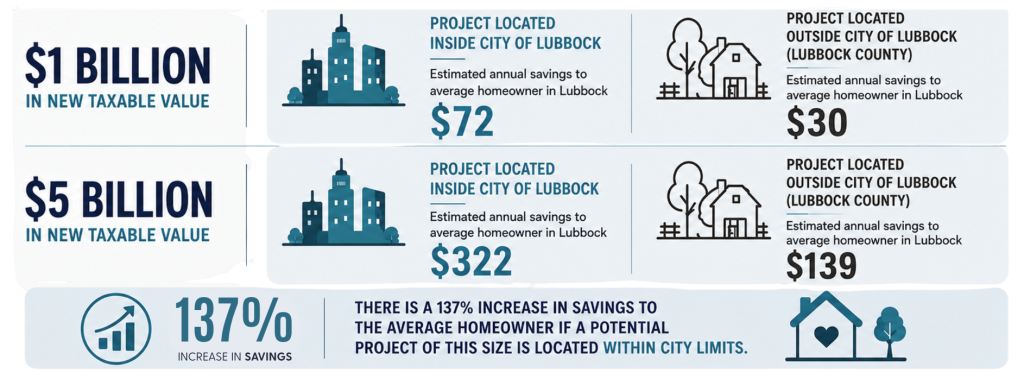
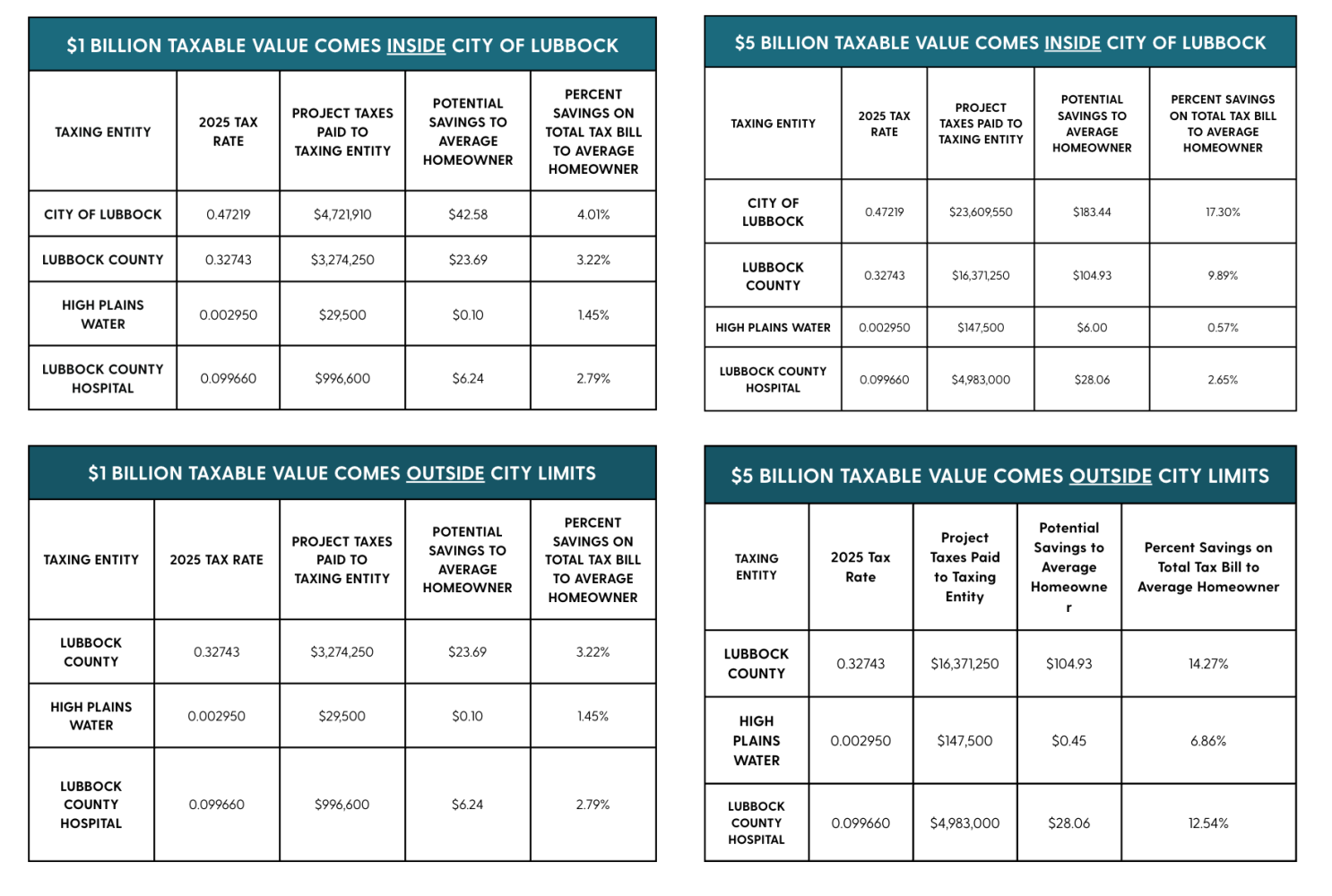
How would a potential large capital investment project (like a data center) impact my taxes?
These examples illustrate how a growing commercial tax base can help reduce the share of local property taxes paid by homeowners over time.
As new development increases Lubbock’s taxable value, more property contributes to funding local services. A larger tax base can allow taxing entities to generate the same revenue with lower tax rates than would otherwise be necessary, helping reduce the tax burden on homeowners. One way to quickly grow the tax base is for large-scale and industrial developments to locate within the city limits. These types of projects add significantly to the tax base but often require fewer public services from taxing entities.
Using the average Lubbock home value ($224,602) and average annual property tax bill ($3,974), these examples illustrate the potential impact if new commercial taxable value is added and tax rates are reduced proportionally.
Actual tax rates are set annually by each taxing entity and depend on budget decisions, property values, and state law.
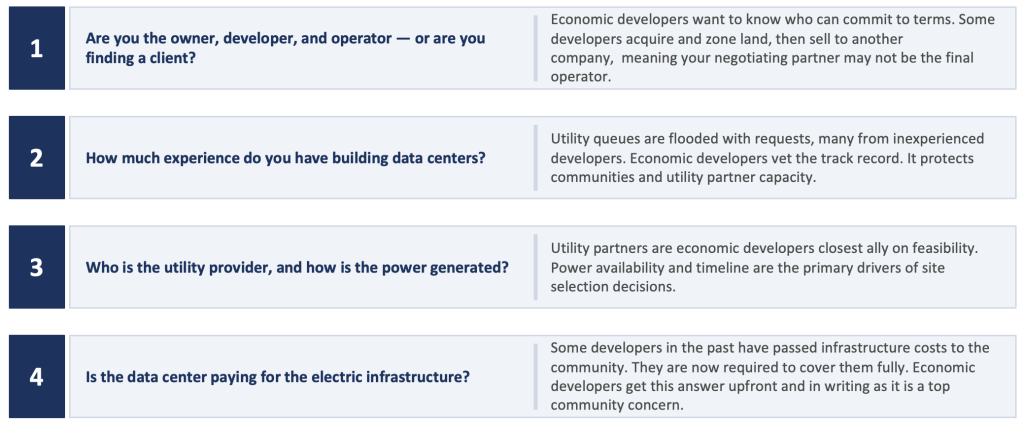
What is Lubbock asking data center developers?
LEDA does not pursue every project presented to the community. Each opportunity undergoes a thorough evaluation. Since 2024, Lubbock has declined to pursue more than $25 billion in proposed projects that were not compatible with the community’s long-term water resources and sustainability priorities.
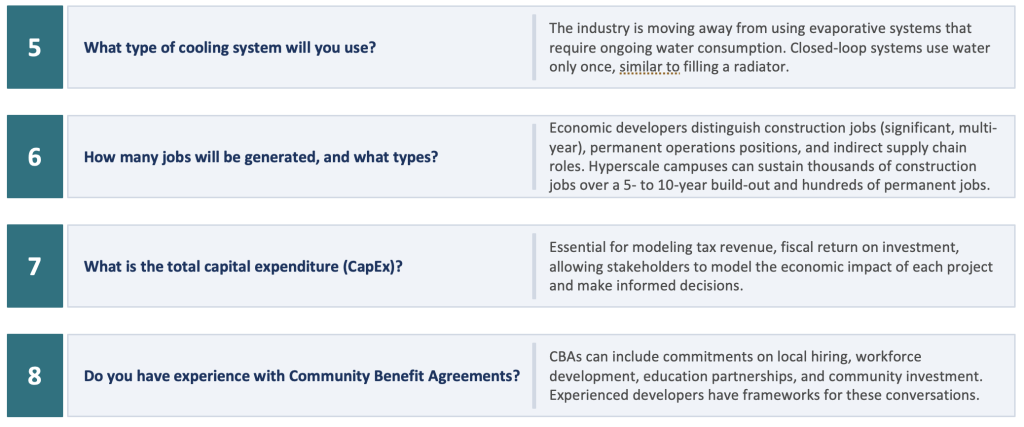
Here are a few questions economic developers are asking data center developers. Full presentation here.
Additional Resources
We recognize that questions about energy use, water consumption, economic impact, and long-term community benefits are important. The resources below provide information to support conversations about data center development in Lubbock.
Learn More about Data Centers
Five Types of Data Centers (CoreSite)
Learn about the five primary types of data centers and how each serves a different purpose within the digital economy.
Types of Data Centers by Industry (Insight Global)
An easy-to-understand overview of how data centers differ based on the industries and organizations they support.
Opportunities and Challenges
A Fact-Based Guide to Top Data Center Concerns (AFCOM)
Addresses common questions about water, electricity, jobs, noise, and other topics frequently raised during data center discussions.
Data Centers and Their Energy Consumption: Frequently Asked Questions (Congressional Research Service)
Provides a nonpartisan overview of how data centers are defined under federal law and explains their energy use.
The Data Center Balance: How States Can Navigate the Opportunities and Challenges (McKinsey & Company)
Discusses how states can balance economic development opportunities with infrastructure planning and community priorities.
Local Thoughts and Conversations
City Manager Presentation to the City of Lubbock
Presentation discussing data center development and related considerations for the Lubbock community.
David Rejino Presentation to the City of Lubbock
Presentation offering additional perspectives on data center development in Lubbock.
Data Center Growth at a State & Regional Level
Governor Abbott Directs Comprehensive Data Center Audit
What Is the Outlook for Data Centers in Texas? (The Perryman Group)
Examines the economic outlook for data center growth across Texas.
Powering Progress (The Perryman Group)
Explores the economic benefits and infrastructure considerations associated with data center development.
The Economic Effects of Data Centers (National Bureau of Economic Research)
Academic research analyzing how data centers affect local economies, employment, and investment.
Data Centers: Community, Energy & Economic Development Webinar (University of Virginia)
Presentation discussing community planning, infrastructure, and policy considerations related to data center growth.
The Local Impact of Data Center Development (Area Development Magazine)
Reviews how data centers can influence local economies, tax bases, workforce needs, and infrastructure.
Data Center Companies That Agreed to Comply With Gov. Greg Abbott
Growth and Impact
Data Center Growth in Texas (University of Texas Bureau of Economic Geology)
An in-depth white paper examining the rapid expansion of data centers across Texas, including trends, infrastructure needs, and future growth.
How U.S. Data Center Growth Affects Water, Energy, and Communities (World Resources Institute)
Explores the environmental impacts of growing data center demand, including energy use, water consumption, and sustainability considerations.
The Future of Data Centers (Brookings Institution)
Examines how artificial intelligence, cloud computing, and changing technology are shaping the future of data center development.